
- News
- City News
- mumbai News
- Pooch pooch hota hai
Trending
This story is from August 29, 2021
Pooch pooch hota hai
The new special canine cops will be inducted into the RPF squad within a year after completion of 32-week training.
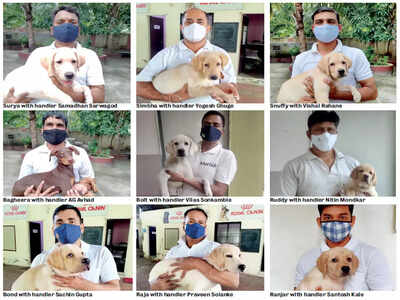
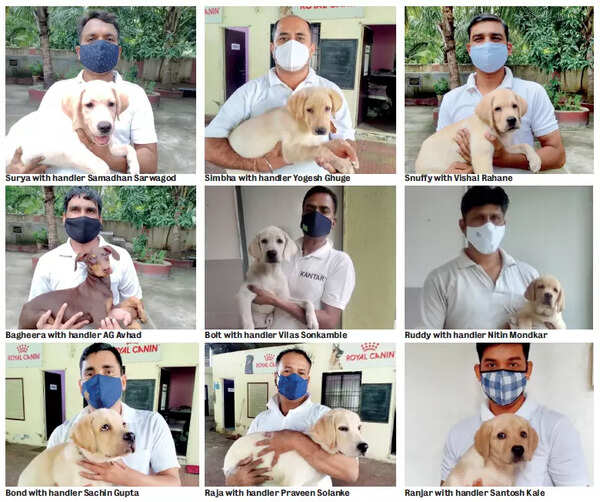
The Railway Protection Force (RPF) of Central Railway’s Mumbai division has received a boost with the recruitment of nine new members in its dog squad. The new members are Ranjar, Surya, Snuffy, Bagheera, Simbha, Bond, Raja, Ruddy and Bolt. Of these, Bagheera, a Dobermann, is a tracker and the eight Labradors are sniffers. The puppies have cost the RPF around Rs 25,000 each.
“On July 23, we purchased 14 puppies for Central Railway. All of them are around three months old. Of these, nine will join the RPF unit of Central Railway’s Mumbai division after completion of their training while the remaining five will be given to other divisions of CR – three to Pune division and one each to Nagpur and Bhusawal,” said a senior officer of CR.
The new special canine cops will be inducted into the RPF squad within a year after completion of 32-week training.
Training of these special members will start at the nominated training centres of the Indian Railways after they complete the age of six months. Currently, all are around three months old. These puppies have been kept with their handlers at different dog kennels of Central railway, including at Carnac Bunder, Matunga, Lokmanya Tilak Terminus and Kalyan.
How are sniffer dogs selected and trained?
Sniffer dogs are used to search or detect explosives or narcotics at railway stations, platforms, trains (Mail/Express/Suburban Services), parcels at all railway premises. Similarly, tracker dogs are utilised for track patrolling, yards, workshops and tracking of anti-social elements or offenders involved in the theft of railway property or passenger crime.
“The process of selecting the genetically fit breed requires the help of experienced veterinary doctors, and a medical follow-up is regularly done by them,” said a senior official of CR.
He said that these puppies were purchased through a spot purchase committee as replacements for retired dogs. Earlier in 2020, nine dogs had retired from the service of Central Railway’s Mumbai division. This new recruitment includes eight sniffers and one tracker.
Jitendra Shrivastava, chairman of the purchase committee and senior divisional security commissioner of Central Railway’s Mumbai division, said, “Dogs are considered to be the best resource when it comes to creating the actual atmosphere of security with their proven effective utility.”
Currently, Central Railway’s Mumbai division has 28 members, including 21 sniffers and seven trackers, in its squad. With the inclusion of the nine recruits, the squad’s strength will go up to 37.
Dogs are considered to be the best resource when it comes to creating the actual atmosphere of security with their proven effective utility
— Jitendra Shrivastava, chairman, CR’s purchase committee
Tracker dogs are trained to follow scent trails left by fugitives or for scent discrimination that is picking one person out of many, whose scent may be at the scene of a crime. For instance, if a theft has been committed and there are several suspects, the dog can sniff out the perpetrator from an article that provides a reference scent from the scene of the crime. While following the scent trail of a fugitive, if the dog comes across the target, it will latch on to it and not release it until commanded by its handler.
Similarly, sniffer dogs are trained to sniff out different types of explosives such as RDX, TNT, ammonium nitrate, Semtex, nitroglycerin, PETN, dynamite, nitrocellulose, black powder and potassium chlorate. Such dogs are deployed with bomb detection and disposal squads, for VIP security or for bomb sweeps of venues where people are to gather. On detecting explosives, the dogs give their handlers silent cues, to avoid alerting any suspects in the vicinity or to avoid setting off sound-triggered explosive devices. Apart from that, sniffer dogs are also trained to sniff out different narcotic and psychotropic substances, including marijuana, methamphetamines, cocaine, heroin, MDMA and PCP or phencyclidine.
End of Article
Follow Us On Social Media








Hot Picks
Top Trending
Explore Every Corner
Across The Globe
RCB vs PBKSIPL Live ScoreVaibhav SuryavanshiTrump TariffsDonald TrumpTom BradyVanessa BryantNBA Trade RumorsTaylor SwiftTrump Tatto TheoryKilmar AbregoMegyn KellyOmar Abdullah FlightStephan CurryNEET UG Admit Card DateBoard Exam ResultUP Board Result DateVITEEE Admit CardCBSE Result DateWrestlemania 41 HighlightsIPL Match TodayInternation Student DeportationNEET PG Exam DateUP Board Result DateTS Inter ResultsSonya CurryIPL Purple CapIPL Orange CapIPL Schedule 2025IPL Points Table
Hot on the Web
Easter WishesJaat Box Office CollectionKesari 2 ReviewKesari 2 Box Office CollectionLung Health TipsBaby Girl NamesHair Regrowth OilParenting HabitsNational ParksBird BeakHorses TypesPooja HegdeKidney HealthKing cobra vs MongooseL2 Empuraan OTT ReleaseDeer VarietiesZinc Deficiency SignsAvocado Pit Using TipsSeema SajdehChia Seed WaterVicky JainChia Seed WaterIndia National ParksKatie ThurstonAlyy KhanRakhee GulzarPuneet IssarAsim RiazBoost Brain PowerUrvashi Rautela
Trending Topics
Who Won Yesterday IPL MatchCoach Peter LavioletteSanjay Bangar SonWrestlemania 41 Date and TimeTom BradySundar PichaiSanjiv GoenkaYuzvendra ChahalSeth RollinsAnti Trump ProtestAsaduddin OwaisiRahul GandhiUP Board Result DateICSE Board Result DateIPL Youngest PlayerChannai Suburban TrainNEET PG Exam DateTech LayoffsDelhi Traffic AdvisoryNikku MadhusudhanGarena Free Fire Redeem CodesNYT StrandsArvind Kejriwal Pushpa DanceLauren SanchezElon MuskFlorida state active shooterBank Holidays AprilPublic Holidays AprilCraftmine Update
Popular Categories
HeadlinesSports NewsBusiness NewsIndia NewsWorld NewsBollywood NewsHealth+ TipsIndian TV ShowsTechnologyTravelEtimesHealth & FitnessWWENFLICC Champions TrophyAstrologyWeather TodayIPLAnimeApril Bank HolidaysPublic Holidays in AprilIPL TeamsStock Market HolidaysNSE HolidaysBSE HolidaysMCX HolidaysTechnology NewsInternational SportsPublic HolidaysBank Holidays
Latest News
Rotten and fungal-infected cabbage and beetroot, rat faeces, and expired bread found in three Telangana restaurantsElon Musk sends flowers to mother Maye Musk in Mumbai: All about the billionaire’s glamorous momSamsung to infuse AI across entire product line: President JB ParkEaster Parade 2025 takes over NYC: History and how to watch the colourful celebrationsRCB vs PBKS, IPL 2025: Why Royal Challengers Bengaluru just told Salman Khan, 'Sorry Bhai ...' after 11 yearsWWE WrestleMania 41 Night 2 Preview, Match Card, How to Watch, and More‘Marginalisation Of English Is No Small Matter’Flames of Power: Ranking the 15 Strongest Fire Force CharactersJason Gillespie blasts Pakistan cricket board: 'I'm still waiting on unpaid dues''I love you. Happy Easter': Slain Texas teen Austin Metcalf's father posts emotional tributeRJ Mahvash spotted clapping and cheering for Yuzvendra Chahal during Punjab Kings match at IPL 2025 - See photoBattle For US Colleges'We weren't good enough': Ricky Ponting praises Virat Kohli after PBKS' loss to RCBWhy Tesla CEO Elon Musk just got loads of flowers delivered to MumbaiDragon Ball’s 40-year wait ends: Classic series finally streams worldwide on CrunchyrollIndian Bank eyes to disburse Rs 20,000 cr to SHGs in this financial yearTrump considers gutting US diplomatic footprint in Africa: Draft planNBA Trade Rumors: Golden State Warriors could bag $166 million Miami Heat superstar to form Big 3 with Stephen Curry and Jimmy Butler
Copyright © 2025 Bennett, Coleman & Co. Ltd. All rights reserved. For reprint rights: Times Syndication Service